
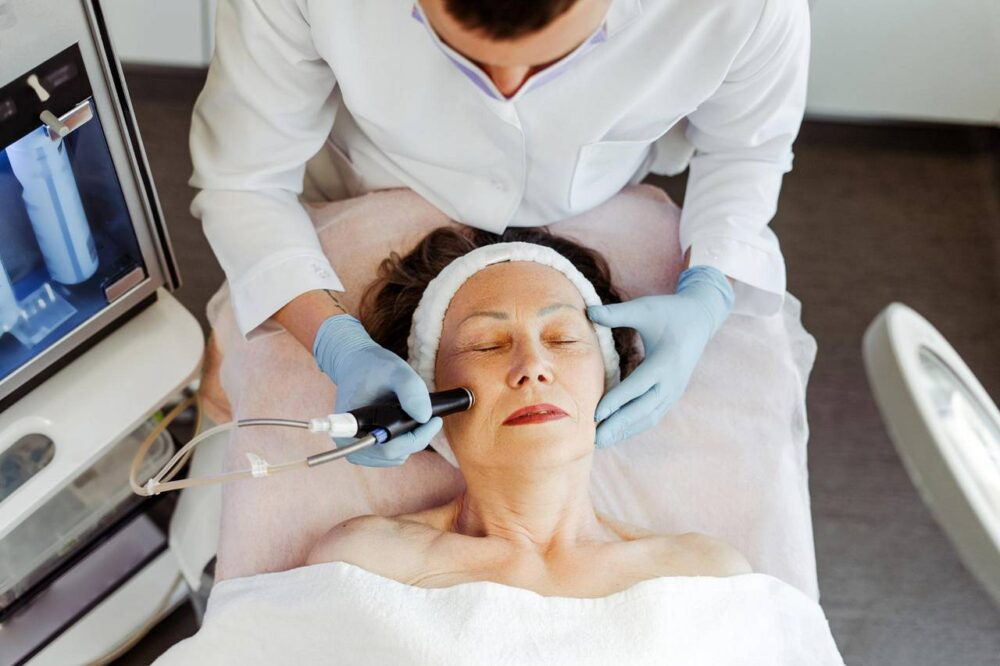
Non-surgical skin rejuvenation has evolved dramatically over the past decade. While traditional microneedling remains one of the most trusted collagen-induction therapies, a new advancement has significantly elevated its potential: exosome-enhanced microneedling.
Non-surgical skin rejuvenation has evolved dramatically over the past decade. While traditional microneedling remains one of the most trusted collagen-induction therapies, a new advancement has significantly elevated its potential: exosome-enhanced microneedling.
In aesthetic hubs like Beverly Hills, innovation tends to move quickly. Clinics and medical spas constantly integrate emerging regenerative technologies designed to improve skin recovery, texture, elasticity, and overall vitality. Among the practices offering this advanced treatment approach is The M Day Spa, where microneedling with exosomes is positioned as a regenerative-focused solution for patients seeking measurable yet natural-looking improvements.
This article explores how microneedling with exosomes works, why it has gained attention in Beverly Hills, what the science suggests, and what patients should understand before considering treatment.
Understanding traditional microneedling
Microneedling — also known as collagen induction therapy — involves the use of a device equipped with fine needles that create controlled micro-injuries in the skin. These microchannels stimulate the body’s natural wound-healing response.
The process activates:
-
Fibroblast activity
-
Collagen production
-
Elastin formation
-
Increased cellular turnover
Microneedling is commonly used to address:
-
Fine lines and wrinkles
-
Acne scars
-
Enlarged pores
-
Uneven texture
-
Mild skin laxity
-
Hyperpigmentation
While effective on its own, researchers and clinicians have explored ways to amplify its regenerative potential — leading to the integration of biologically active serums, growth factors, and more recently, exosomes.
What are exosomes?
Exosomes are extracellular vesicles — microscopic signaling particles released by cells. They play a key role in intercellular communication by delivering proteins, growth factors, lipids, and genetic material between cells.
In regenerative medicine, laboratory-processed exosomes derived from stem cell cultures are used topically to support tissue repair and cellular signaling.
Rather than introducing live cells, exosome therapy leverages the signaling components that encourage skin rejuvenation.
When applied after microneedling, exosomes may:
-
Enhance cellular communication
-
Support faster recovery
-
Reduce inflammation
-
Promote collagen synthesis
-
Improve overall skin quality
It is important to note that research into exosome-based therapies is ongoing, and protocols may vary between providers.
Why combine microneedling with exosomes?
Microneedling creates temporary microchannels in the skin. These channels increase permeability and allow topical substances to penetrate more effectively.
By applying exosomes immediately after microneedling:
-
Absorption is enhanced
-
Regenerative signaling may be amplified
-
Downtime may potentially be reduced
-
Post-treatment redness may resolve more quickly
In high-performance aesthetic markets such as Beverly Hills, combination therapies are increasingly preferred because they aim to optimize results without increasing invasiveness.
The Beverly Hills approach to regenerative aesthetics
Aesthetic standards in Beverly Hills tend to prioritize subtle refinement over dramatic alteration. Patients often seek treatments that:
-
Improve skin quality
-
Preserve natural facial expression
-
Avoid extended downtime
-
Support long-term skin health
Microneedling with exosomes aligns with this philosophy because it stimulates the body’s own regenerative processes rather than adding artificial volume or altering facial structure.
At The M Day Spa, treatment protocols emphasize physician-supervised safety, personalized assessment, and tailored depth settings based on individual skin type and goals.
The treatment process: What patients can expect
While protocols vary slightly between providers, the general process includes:
1. Consultation
A comprehensive consultation evaluates:
-
Skin condition
-
Medical history
-
Previous treatments
-
Sensitivities
-
Treatment expectations
Not all patients are candidates. Individuals with active infections, certain autoimmune conditions, or uncontrolled skin disorders may be advised against treatment.
2. Preparation
The skin is cleansed thoroughly. A topical anesthetic is typically applied to minimize discomfort.
3. Microneedling procedure
A controlled device creates microchannels across the treatment area. Depth varies depending on the concern being addressed.
4. Exosome application
Exosome serum is applied immediately after microneedling to maximize absorption through the microchannels.
5. Recovery guidance
Post-treatment care may include:
-
Gentle cleansing
-
Avoidance of sun exposure
-
Temporary suspension of active skincare ingredients
-
Hydration support
Most patients experience redness for 24–72 hours, similar to a mild sunburn.
Potential benefits observed in clinical settings
Although individual results vary, patients undergoing microneedling with exosomes may notice improvements in:
-
Skin smoothness
-
Reduction in fine lines
-
Diminished acne scarring
-
Brighter complexion
-
Improved elasticity
Results are typically progressive. Collagen remodeling can continue for weeks following treatment.
For optimal outcomes, a series of sessions spaced several weeks apart is often recommended.
Safety and regulatory considerations
As with any regenerative treatment, safety depends on proper sourcing and clinical oversight.
Patients should verify:
-
The origin and processing standards of exosome products
-
Whether the procedure is performed under medical supervision
-
Provider licensing and credentials
-
Clear explanation of potential risks
In California, aesthetic procedures are subject to medical regulatory oversight. Reputable facilities — including The M Day Spa — operate within these frameworks to ensure patient safety and informed consent.
Possible side effects may include:
-
Temporary redness
-
Mild swelling
-
Dryness or flaking
-
Sensitivity
Serious complications are rare when performed appropriately.
How it differs from PRP (Platelet-rich plasma)
Many patients compare exosome therapy to PRP.
PRP uses a patient’s own blood plasma, centrifuged to concentrate growth factors. Exosomes, on the other hand, are laboratory-derived signaling vesicles.
Key differences:
-
PRP requires blood draw; exosomes do not
-
Exosome concentration may be standardized
-
PRP variability depends on patient health
Both approaches aim to stimulate regeneration, but the mechanisms and preparation differ.
A consultation with a qualified provider helps determine which approach aligns with individual goals.
Who is an ideal candidate?
Microneedling with exosomes may be suitable for individuals who:
-
Have early signs of aging
-
Experience mild to moderate acne scarring
-
Seek improved skin texture
-
Prefer non-surgical options
-
Want minimal downtime
It may not be ideal for individuals with:
-
Active cystic acne
-
Open wounds
-
Pregnancy
-
Certain chronic skin conditions
Medical screening remains essential.
The role of maintenance and long-term skin planning
Regenerative treatments are most effective when incorporated into a broader skin health strategy.
A long-term plan may include:
-
Medical-grade skincare
-
Periodic collagen-stimulating sessions
-
Sun protection
-
Lifestyle optimization
In aesthetic-focused communities like Beverly Hills, preventative maintenance is often prioritized over reactive correction.
The growing interest in regenerative aesthetics
Exosome therapy reflects a broader shift in aesthetic medicine toward biologically integrated treatments.
Instead of relying solely on fillers or neuromodulators, regenerative approaches aim to:
-
Improve intrinsic skin function
-
Enhance structural integrity
-
Support natural healing
While long-term data continues to develop, early research and clinical experience suggest promising potential.
What sets Beverly Hills providers apart
Beverly Hills remains influential because it merges innovation with discretion and clinical precision.
Patients choosing providers in Beverly Hills often expect:
-
Transparent communication
-
Customized protocols
-
Conservative aesthetic philosophy
-
High sanitation standards
-
Detailed post-care planning
Facilities such as The M Day Spa position treatments like microneedling with exosomes within a medically informed framework, rather than presenting them as trend-driven services.
Final considerations before booking
Before scheduling microneedling with exosomes, patients should:
-
Schedule a comprehensive consultation
-
Ask about product sourcing
-
Discuss realistic outcomes
-
Understand required session frequency
-
Review contraindications
Informed decision-making ensures both safety and satisfaction.
Conclusion: Where innovation meets responsible aesthetic care
Microneedling with exosomes represents a next-generation approach to non-surgical skin rejuvenation. By combining mechanical collagen stimulation with biologically active signaling vesicles, the treatment aims to enhance natural repair mechanisms.
In a market like Beverly Hills, where aesthetic standards are exceptionally high, regenerative treatments are embraced when they align with safety, transparency, and subtle enhancement.
When performed under appropriate medical supervision — such as at The M Day Spa — this approach may offer patients a balanced path toward improved skin quality without invasive intervention.
As with all aesthetic procedures, education and professional guidance remain essential. Regenerative technology continues to evolve, and patients who prioritize expertise and ethical practice are best positioned to achieve meaningful, natural-looking results.