
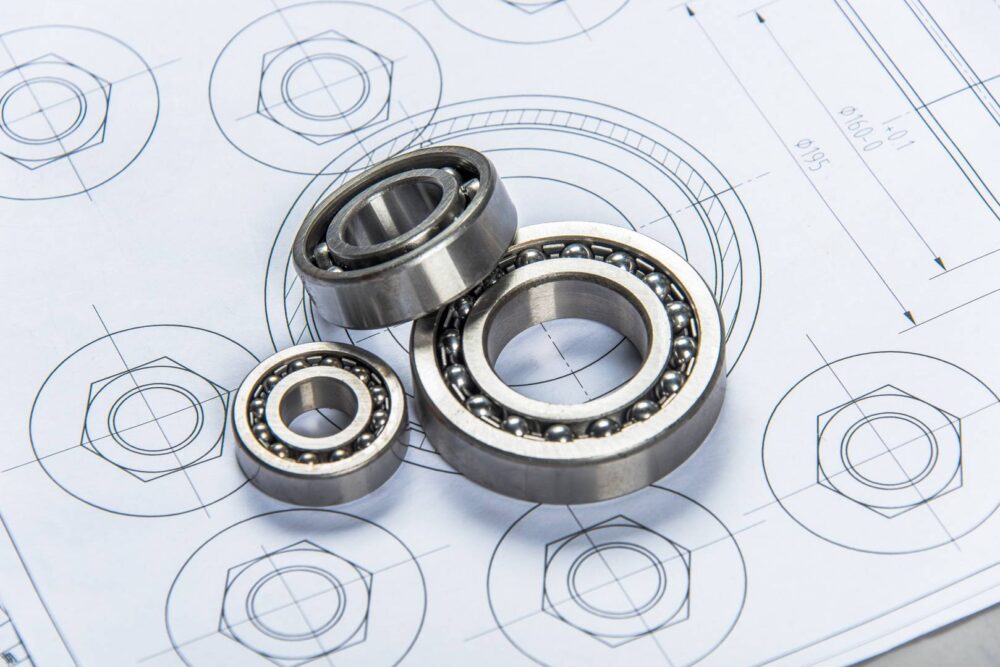
Choosing the right bearing can optimize performance and significantly reduce operational costs, making all the difference in the functioning of machines and equipment. To achieve these benefits, it is crucial to always consider the specific application of the bearings, since each system has its own requirements and challenges.
Additionally, environmental conditions such as temperature, humidity, and exposure to chemical agents must be carefully analyzed, as they directly affect bearing durability and efficiency. Another determining factor is the load requirements, which must match the bearing’s capacity to avoid failures or premature wear. By aligning these criteria accurately, we ensure that the selected bearings will effectively meet operational needs, providing smooth and economical operation.
Choosing the right ball bearing can optimize performance and significantly reduce operational costs, making all the difference in the functioning of machines and equipment. To achieve these benefits, it is crucial to always consider the specific application of the bearings, since each system has its own requirements and challenges.
Additionally, environmental conditions such as temperature, humidity, and exposure to chemical agents must be carefully analyzed, as they directly affect bearing durability and efficiency. Another determining factor is the load requirements, which must match the bearing’s capacity to avoid failures or premature wear. By aligning these criteria accurately, we ensure that the selected bearings will effectively meet operational needs, providing smooth and economical operation.
Understanding the Types of Ball Bearings
Understanding the different types of ball bearings is essential to enhance the performance of machines and equipment, as well as to optimize operational costs. Each category of bearing has specific characteristics that make it more suitable for certain applications, considering not only the type of load but also environmental conditions and the operational requirements of the system where it will be used.
Radial Ball Bearings and Their Applications
Radial ball bearings are commonly used in applications that require support for radial loads. This type of bearing is widely employed in industrial equipment due to its ability to withstand both moderate loads and high rotational speeds. They are predominantly used in electric motors, gearboxes, and various industrial machines where radial load is predominant. Their construction allows for uniform load distribution, which improves durability and contributes to smooth and efficient operation.
Angular Contact Ball Bearings and Where to Use Them
Angular contact ball bearings are designed to support combined loads, meaning both radial and axial loads. They are especially useful in applications where precision and stability are critical, such as in machine tools and precision shafts. Their ability to withstand axial loads in one direction makes them ideal for situations where simultaneous radial and axial loads are applied. The selection of this type of bearing should consider the primary direction of axial load, ensuring that it provides the necessary support for optimal performance.
Thrust Ball Bearings: Advantages and Disadvantages
Finally, thrust ball bearings are designed specifically to support axial loads and are frequently used in structures that require additional stabilization in the axial direction. One of their main advantages is the ability to operate efficiently under pure axial load, such as in turntables and pulley systems. However, their main disadvantage lies in their inability to support radial loads, restricting their use to situations where only axial load is present. This highlights the importance of carefully evaluating load requirements before selecting this type of bearing to ensure compatibility with the application’s specific needs.
Therefore, when considering the types of ball bearings mentioned above, it is crucial to evaluate the specific characteristics of each bearing, ensuring that they meet application requirements and maximize the efficiency and service life of industrial machinery.
Identifying the Appropriate Materials
Choosing the correct materials for bearings is an essential step in the selection process, as it directly impacts performance and longevity. When determining which material to use, it is important to consider where and how the bearings will be used. In this context, stainless steel, carbon steel, and ceramic are the most commonly chosen materials, each with distinct characteristics and specific applications.
When to Choose Stainless Steel vs. Carbon Steel Bearings
Stainless steel bearings are often the best choice in applications where corrosion resistance is vital. They are highly effective in humid environments or where there is exposure to chemicals, making them ideal for the food and pharmaceutical industries, as well as equipment operating in coastal areas. Carbon steel, on the other hand, is more suitable for less aggressive environments, where load is the primary concern and cost reduction is required. This material provides high strength and is typically used in heavy industrial, automotive, and construction machinery, where mechanical durability under load is essential.
Uses of Ceramic Bearings and Their Advantages in Specific Applications
Ceramic bearings are gaining popularity due to their exceptional characteristics, despite their higher cost. They are significantly lighter than steel bearings and offer lower friction resistance, resulting in greater energy efficiency and less heat dissipation. In applications that require high rotational speeds, such as high-precision electric motors and turbochargers, ceramic bearings provide clear advantages, including reduced wear compared to traditional bearings. Another notable advantage is their resistance to thermal shock and extreme temperature variations, making them suitable for harsh environments where sudden temperature changes are common.
Impact of Material Types on Bearing Durability and Function
Choosing the correct material directly affects bearing durability and functionality. Inadequate materials can lead to premature failures, while proper selection helps ensure that bearings meet performance expectations under planned operating conditions. Analysis of material characteristics such as corrosion resistance, load-bearing capacity, and wear resistance must be an integral part of the selection process. This optimizes not only bearing function and longevity but also the overall efficiency and operating cost of the system where they are installed.
Thus, a clear understanding of material properties and operational conditions is essential to ensure that the chosen bearings perform efficiently, reducing downtime and long-term maintenance costs.
Performance and Load Considerations
When choosing the right bearing, understanding how radial and axial loads affect selection is fundamental to ensuring efficiency and device longevity. Radial load refers to the force perpendicular to the bearing’s axis, while axial load is the force parallel to the axis. Choosing bearings that can adequately support both radial and axial loads is crucial to avoid mechanical failures and ensure smooth, reliable operation.
Radial and Axial Load
In bearing applications, selection can vary significantly depending on which type of load is predominant. Ball bearings typically perform well under moderate radial loads and limited axial loads. In situations where there is significant axial load, it is advisable to use more specialized bearings, such as angular contact bearings, which are designed to handle mixed directional loads. It is always important to ensure that the chosen bearing meets the load requirements and adapts to overall operating conditions.
Operating Speed Criteria
Operating speed is another key factor that influences bearing selection. Each bearing type has a recommended maximum operating speed, and exceeding this limit can result in overheating and accelerated wear. Ball bearings, for example, are known for their ability to support high speeds due to the lower friction inherent in their design. However, when selecting a sealed bearing, it is important to consider that the presence of the seal may limit maximum speed due to increased friction.
Sealed vs. Unsealed Bearings
The decision to use sealed or unsealed ball bearings must be carefully evaluated based on environmental conditions and maintenance requirements. Sealed bearings offer additional protection against contaminants and are ideal for dirty environments or areas with high debris levels, reducing the need for frequent maintenance. However, seals may reduce maximum operating speed. Unsealed bearings, on the other hand, allow greater freedom of movement and can operate at higher speeds, provided the environment is controlled and lubrication is regularly monitored to avoid contamination.
By choosing carefully and considering all these aspects, it is possible to achieve an ideal balance that optimizes system performance and maximizes bearing life, aligning operation with efficiency and cost savings.
Understanding Operational Conditions
When selecting the appropriate component for your equipment, temperature and environment play a fundamental role in bearing characteristics. Each application requires a thorough analysis of operating conditions to ensure that the bearing chosen will meet the specific working requirements.
Influence of Temperature and Environment on Bearing Characteristics
Temperature can significantly alter the properties of the materials that make up bearings. In high-temperature environments, for example, internal components may expand, negatively affecting bearing performance and service life. Therefore, for high-heat situations, it is essential to choose bearings designed with materials that can withstand these conditions while maintaining precision and operational efficiency.
Additionally, humidity and exposure to corrosive agents cannot be ignored when selecting the right bearing. Locations subject to high humidity or constant exposure to chemicals require bearings with corrosion-resistant characteristics to ensure reliable, uninterrupted operation.
Bearings for Humid or Corrosive Environments
For humid environments, it is advisable to use ball bearings with additional protection or those made from stainless materials. These bearings are designed to withstand adverse conditions, protecting against corrosion that may compromise bearing integrity and, consequently, the entire system.
Bearings Designed for High-Temperature Operation
For efficient operation in high-temperature environments, bearings must be manufactured with special materials, including metallic alloys or coatings that maximize heat resistance. Additionally, such configurations often involve the use of specific lubricants to minimize friction and excessive wear, ensuring stable performance and extending bearing life. Adapting the bearing to its specific environment is crucial to prevent failures and extend maintenance intervals, resulting in more economical and safer operation.
Cost–Benefit Analysis
Choosing the right bearing requires careful attention to application needs and characteristics. It is necessary to balance cost and performance to ensure that the investment brings a positive return over time.
Balancing Cost and Performance in Bearing Selection
When selecting a bearing, it is important to consider both initial cost and long-term performance. Opting for the cheapest bearing is not always the best decision, as lower-quality products may result in frequent maintenance and system failures. High-performance bearings may seem expensive at first, but they offer superior durability and greater efficiency, reducing operational costs. Analyzing specifications such as load capacity and resistance to environmental conditions can help identify the right balance between cost and performance.
Impact of Bearings on Energy Efficiency and Long-Term Maintenance
Bearings play a crucial role in a system’s energy efficiency. Bearings that operate with low friction reduce energy consumption and increase equipment lifespan. Additionally, high-quality bearings require less maintenance, minimizing repair and replacement costs. Long intervals between bearing-related maintenance indicate a correct selection that not only lowers expenses but also improves system reliability.
Examples of Savings Using the Right Bearing
Imagine an industrial application where an inadequate bearing leads to frequent downtime for component replacement. By choosing a high-strength bearing specifically designed for operational conditions, downtime and associated maintenance costs are eliminated. In other cases, where speed is critical, using bearings with specialized lubricants can ensure excellent performance and extended lifespan, preventing system overload. Both scenarios show that appropriate bearing selection results in significant savings and improved equipment efficiency.
Therefore, when considering all these aspects in a cost–benefit analysis, companies can not only save money but also enhance system performance, ensuring reliable and efficient operation.
Conclusion
Choosing the right bearing plays a crucial role in optimizing machinery and reducing operational costs. Understanding your application’s specific needs is essential for making the right decision. In this process, it is important to consider several factors that ensure efficient performance.
First, it is essential to evaluate the environmental conditions where the bearing will be used. Extreme temperatures, exposure to contaminants, and the presence of humidity are key factors in choosing the material and bearing type. For example, in corrosive environments, stainless steel bearings or those with protective coatings are more suitable.
Additionally, load requirements are a key factor in selection. The load may be axial, radial, or combined, and the suitable bearing type varies according to load direction and intensity. Ball bearings are ideal for light loads and high speeds, while roller bearings are recommended for heavy loads.
Another important aspect is bearing maintenance and service life. High-quality bearings may cost more initially but provide greater durability, reducing the need for frequent replacement and constant maintenance.
Manufacturing specifications such as tolerances and clearances must also be considered to ensure proper fit and avoid premature wear. Incorrect installation can compromise performance and reduce bearing life.
Ultimately, choosing the right bearing makes a significant difference in industrial operations, optimizes machine performance, and helps reduce operational costs. By considering specific applications, environmental conditions, and load requirements, it is possible to acquire a bearing that fully meets operational needs.